Why Professional Drain Cleaning Is About More Than Restoring Flow
When your toilet starts rising, your gully trap overflows, or you hear strange gurgling sounds from the shower, your first instinct is usually simple: get the blockage cleared and get things flowing again.
There’s nothing wrong with that.
The problem is that restoring flow and solving the problem are not always the same thing.
Over the years, I’ve attended hundreds of blocked drain callouts throughout Hawke’s Bay. One thing I’ve learned is that the symptoms homeowners see above ground rarely tell the full story. A blocked drain caused by fat buildup can look the same as a blocked drain caused by root intrusion, a damaged pipe, or a failed repair hidden underground.
That’s why professional drain cleaning isn’t just about getting water moving again.
It’s about understanding why it stopped moving in the first place.
Before I even arrive at a blockage callout, I ask a series of questions to help determine where the problem may be located. The answers often provide useful clues, but they don’t tell me what’s actually inside the pipe.
Only a proper inspection can do that.
Common Signs You Need Professional Drain Cleaning
Your Toilet Rises When Flushed
One of the first questions I ask is whether the toilet rises when flushed.
If water levels are increasing in the bowl or taking longer than normal to disappear, wastewater is struggling to move through the drainage system.
Depending on what other fixtures are doing, the problem may be limited to the toilet itself, a branch line, or the property’s main wastewater drain.
You Hear Gurgling Or Glugging Sounds
Strange noises from toilets, showers, sinks, or baths are often an early warning sign that a blockage is developing.
Many homeowners ignore these sounds because everything is still draining.
In reality, these noises often indicate restricted flow or trapped air within the drainage system.
Your Gully Trap Is Raised Or Overflowing
If wastewater is sitting high inside a gully trap or overflowing onto the ground when fixtures are used inside the house, there is almost always a restriction somewhere downstream.
In some cases, the blockage is limited to the gully itself. A common example is fat buildup accumulating at the base of the gully trap.
In many other cases, the issue is further down the wastewater line.
Either way, it should be investigated before the situation becomes worse.
You’ve Had The Same Drain Cleared Before
This is one of the biggest warning signs I see.
When I ask homeowners whether they’ve experienced the problem before, the answer is often yes.
Recurring blockages rarely happen without a reason.
Repeated issues can indicate:
- Root intrusion
- Structural pipe damage
- Poor previous repairs
- Pipe settlement
- Fat accumulation
- Sections of the drain holding water
If the same drain keeps blocking, the blockage itself is often only the symptom.
Why Symptoms Only Tell Part Of The Story
One of the biggest misconceptions about blocked drains is that symptoms can identify the cause.
They can’t.
A raised gully trap won’t tell you whether roots are growing inside the pipe.
A rising toilet won’t tell you whether a section of pipe has collapsed.
A gurgling shower won’t tell you whether fat buildup is restricting flow.
Symptoms tell us where to start looking.
They don’t tell us what we’ll find.
That’s why professional drain cleaning should never be about simply restoring flow and leaving.
The real value comes from understanding what caused the blockage and whether it’s likely to happen again.
Real Examples From Hawke’s Bay
The Hastings Property With Severe Pipe Damage
One Hastings job perfectly demonstrates why diagnosis matters.
The property had multiple gully traps overflowing whenever toilets were used. The homeowner had experienced previous drainage problems and believed the line had already been inspected.
After locating an access point, I flushed the line and restored flow.
While clearing the drain, I noticed one section was unusually difficult to navigate. Despite adjusting the hose and using reverse flushing jets to break up waste and paper, the area continued causing problems.
A CCTV inspection revealed why.
The wastewater line was severely damaged in multiple locations, with sections of pipe missing entirely.
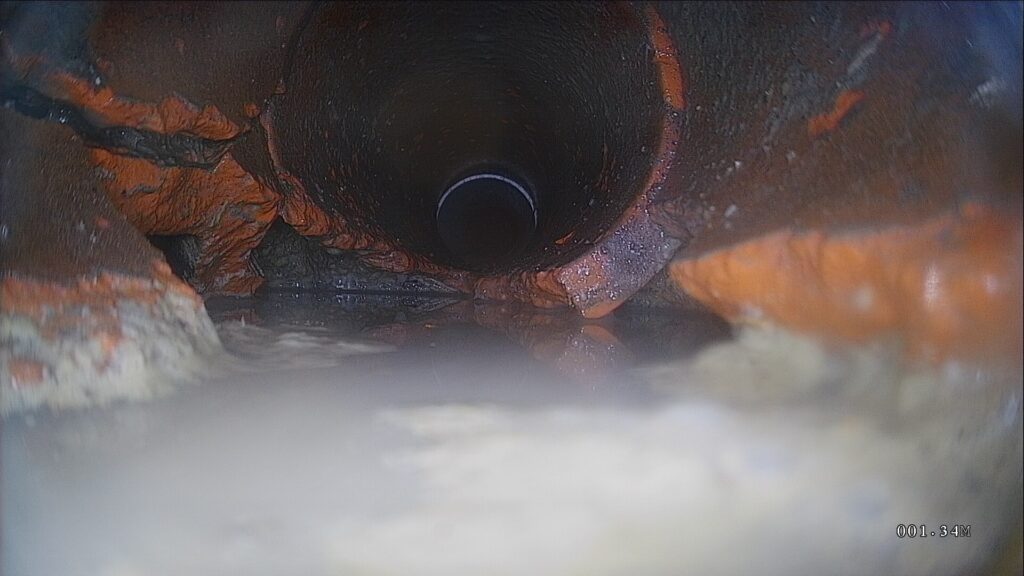
The damage was located and marked so repairs could be carried out.
The client knew the pipe had some cracking, but had no idea the damage was this extensive until he saw the CCTV footage himself.
The blockage was cleared.
The damaged pipe was the real problem.
The New Napier Home With A Hidden Defect
Many homeowners assume newer homes cannot have drainage issues.
Unfortunately, that’s not always true.
I attended a blockage at a Napier property less than five years old. The homeowner was understandably surprised that a relatively new wastewater line had blocked.
After clearing the restriction, I carried out a CCTV inspection.
The inspection revealed a significant dip where a newer PVC pipe had been connected to an older earthenware pipe.
Wastewater and fat were collecting in this low point, gradually restricting flow.
Using a spinning descaling head, I removed the buildup and restored capacity to the line.
The defective section was then marked for repair.
Once again, the blockage wasn’t the real issue.
The installation defect was.
The Hospital Hill Property With Recurring Root Intrusion
One of the most revealing jobs I attended was on Hospital Hill in Napier.
The homeowner believed the original earthenware drain had been completely replaced with PVC years earlier.
Despite this, the property continued experiencing repeated blockages.
We attended shortly after another contractor had already restored flow.
After clearing the line, I carried out a CCTV inspection and discovered the wastewater drain wasn’t PVC throughout as expected. Instead, multiple sections of different pipe materials had been joined together through various repairs completed over the years.
At nearly every transition point, roots had entered the system.
What was even more interesting was that previous clearing attempts appeared to have punched small holes through the root masses rather than removing them completely.
That restored flow temporarily but left most of the roots behind.
In situations like this, another blockage is often only a matter of time.
A full root-cutting operation was carried out to properly remove the intrusion, followed by CCTV verification to confirm the line was clear.
The homeowner was surprised to discover the line was far more complex than they had been led to believe.
The recurring blockages suddenly made perfect sense.
Common Misconceptions About Drain Cleaning
“The Drain Is Flowing Again, So It’s Fixed”
This is probably the biggest misconception I encounter.
A drain can be flowing perfectly while still suffering from:
- Root intrusion
- Pipe damage
- Fat buildup
- Poor repairs
- Sections holding water.
Restoring flow is important. Understanding why the blockage happened is equally important.
“PVC Pipes Can’t Get Root Intrusion”
PVC is generally more resistant than older earthenware pipes.
However, PVC is not immune to root intrusion.
Roots can enter through failed joints and poorly sealed connections. In some situations, large root masses can grow around the pipe itself, eventually deforming or crushing sections of pipe.
“Anything Can Go Down The Kitchen Sink”
Fat, oil, and grease remain some of the most common causes of drain blockages.
While they may be liquid when they leave the sink, they cool and solidify further down the drainage system.
Eggshells are another common culprit.
Over time, they break down into fine grit, which settles at low points and within gully traps, gradually contributing to restrictions.
Drainage Problems Commonly Found In Hawke’s Bay
Every region develops its own drainage patterns.
In Havelock North, mature trees and heavily planted berms regularly contribute to root intrusion issues.
In parts of Napier, reclaimed ground and historical development patterns can contribute to settlement-related drainage defects.
Many of the systems we inspect today have also undergone decades of repairs, alterations, and material transitions.
Those hidden changes often become the weak points where future drainage problems develop.
When Should You Get Professional Drain Cleaning?
If you’re experiencing:
- Rising toilets
- Gurgling fixtures
- Slow drainage
- Raised gully traps
- Wastewater overflows
- Recurring blockages
It’s worth having the problem properly investigated. The sooner the cause is identified, the easier and less expensive it is to address.
The Real Goal Isn’t Just Restoring Flow
Most homeowners call a drainage company because they want the blockage gone.
That’s completely understandable.
But after years of investigating blocked drains throughout Hawke’s Bay, I’ve learned that the blockage itself is often the least interesting part of the job.
The real question is why it happened.
When the cause is identified, homeowners can make informed decisions, avoid repeat callouts, and prevent minor issues from becoming major repairs.
That’s why, wherever possible and practical, I carry out a CCTV inspection free of charge after clearing a drain.
Over the years, I’ve found that the most expensive drainage problems are often the ones nobody knew existed. Root intrusion, failed repairs, damaged pipework, settlement, and hidden defects can all sit unnoticed beneath the ground while the only visible symptom is an occasional blockage.
Clearing the blockage restores flow.
Understanding why it happened helps prevent it from happening again.
That’s the difference between simply unblocking a drain and properly investigating it.